

Key Takeaways
- Understanding the Corporate Transparency Act (CTA) is crucial for businesses to ensure compliance and avoid penalties.
- Recent legal developments have impacted the enforcement and scope of the CTA, particularly concerning domestic and foreign entities.
- Businesses should stay informed about their reporting obligations and seek professional guidance to navigate the complexities of the CTA.
The Corporate Transparency Act (CTA), enacted in 2021, represents a significant shift in the regulatory landscape for corporations in the United States. Designed to counteract the misuse of anonymous entities for financial crimes, the CTA requires businesses to reveal their actual owners. As the legal context surrounding the CTA continues to evolve, business leaders face new challenges and opportunities related to compliance in business. Understanding what’s required and when has never been more essential, particularly as government agencies step up their enforcement efforts and increase scrutiny.
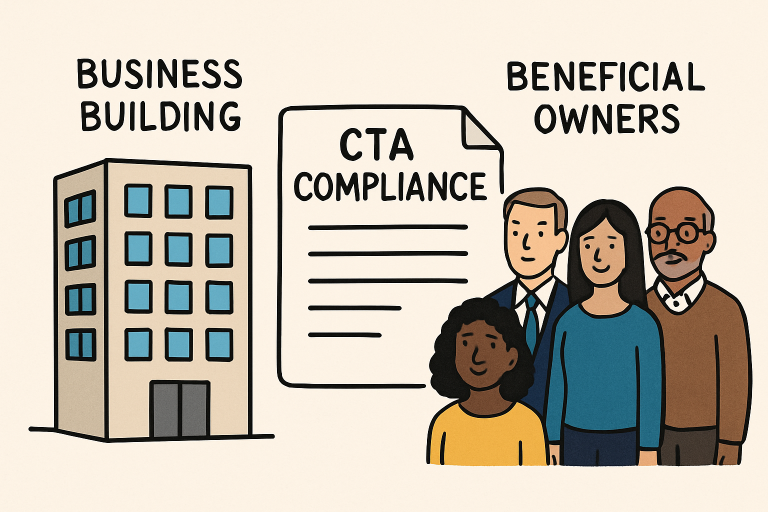
Recent legal changes have complicated compliance requirements for organizations, particularly with a shift in regulatory focus toward foreign companies. Businesses must quickly adapt to ongoing legal changes to avoid steep fines and reputational harm related to beneficial ownership reporting rules. The Corporate Transparency Act (CTA) requires corporations and similar entities to report information on their beneficial owners, defined as individuals who own at least 25% of the company or exercise substantial control over it. While some exemptions exist, most small to mid-sized businesses should evaluate their obligations under the CTA. Vigilance and proactive planning are crucial for ensuring compliance and mitigating risk as government enforcement intensifies.
Recent Legal Developments
Since its implementation, the CTA has faced pushback and changes through regulatory adjustments and legal challenges. A significant shift occurred in March 2025 when the U.S. Treasury Department temporarily paused enforcement for U.S. citizens and domestic reporting companies. This suspension was intended to alleviate the reporting burden and focus instead on foreign-owned entities suspected of higher risk. Soon after this action, further legal challenges led to additional reinstatements and pauses, leaving businesses uncertain about their current obligations. The back-and-forth continues to generate compliance headaches. Domestic companies that once faced imminent reporting deadlines suddenly found themselves exempt—at least temporarily. Meanwhile, the Treasury’s rule proposals suggest that, in the future, the focus of enforcement will remain largely on foreign companies. This ever-changing regulatory landscape underscores the critical importance of regular legal review and subscription to official updates.
Implications for Domestic Businesses
For U.S.-based businesses, shifting regulatory guidance means that compliance isn’t a one-and-done process. Initially required to submit beneficial ownership information by statutory deadlines, these companies experienced a reprieve when enforcement was suspended. Businesses need to recognize that the suspension is not necessarily permanent. Enforcement rules might be reinstated or further revised at any time according to court decisions or regulatory updates. Companies must plan accordingly and maintain flexibility in compliance practices. Proactively gathering and updating beneficial ownership data is the most effective way for domestic businesses to mitigate risk and prepare for future regulatory changes. It is crucial to have processes in place that can quickly respond to new or reinstated requirements.
Implications for Foreign Entities
The current emphasis of enforcement under the CTA is on foreign-owned businesses, particularly those with U.S.-based operations or assets. As a result, foreign entities must be diligent about understanding whether they are categorized as a “reporting company” under the Act and must take steps to disclose beneficial ownership. Regulatory authorities are keen to ensure that foreign companies are not used as vehicles for illicit financial activities. For these companies, the evolving legal and regulatory framework makes compliance a moving target. Staying engaged with legal counsel and regularly reviewing guidance from FinCEN and the Department of the Treasury is vital for avoiding unintentional violations.
Compliance Strategies for Businesses
- Stay Informed: Monitor updates from FinCEN, the U.S. Treasury, and legal sources for the latest developments in CTA enforcement. Consider subscribing to regulatory update newsletters and alerts to stay informed about any changes as they occur.
- Conduct Internal Reviews: Regularly assess your organization’s ownership and control structure. Identify all individuals who might meet the definition of “beneficial owner” and collect accurate information for each.
- Seek Professional Guidance: Consult lawyers, accountants, and compliance experts to interpret how the CTA applies to your business and to help draft reporting processes aligned with the law.
- Implement Robust Record-Keeping: Maintain detailed records of all steps taken to comply with reporting requirements. This documentation not only facilitates timely reporting but also serves as evidence of reasonable faith efforts if your business is subject to review.
Potential Penalties for Non-Compliance
The risks of non-compliance with the CTA are substantial. Willful failure to report beneficial ownership can result in civil penalties of up to $500 per day and criminal penalties, including fines of up to $10,000 and imprisonment for up to two years. These penalties underscore the critical importance of remaining continuously compliant and immediately adapting to legal changes. Given the seriousness of enforcement and the unpredictability of regulatory changes, all businesses—domestic and foreign—should make CTA compliance an ongoing priority, ensuring smooth operations and avoiding unnecessary legal exposure.
Conclusion
The Corporate Transparency Act heralds a new era of financial transparency and accountability for U.S. and foreign businesses operating in the United States. While the legal landscape remains fluid due to ongoing court cases and regulatory refinements, businesses have a responsibility to stay vigilant, informed, and agile. By adopting proactive compliance strategies and consulting trusted advisors, companies can navigate current requirements, prepare for future shifts, and confidently meet the evolving expectations of a regulatory environment.