

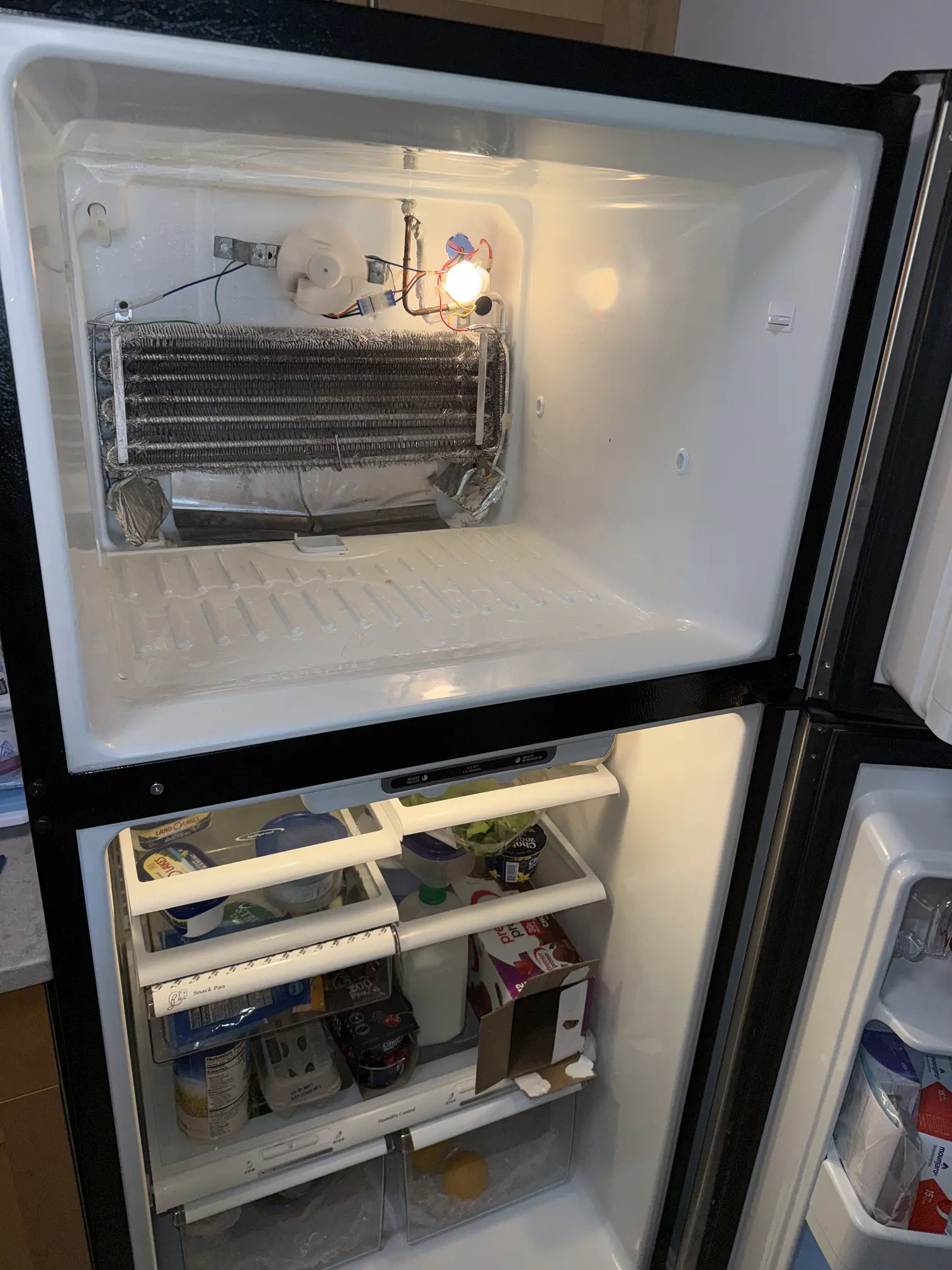
A properly operating freezer keeps food safely stored, reduces unnecessary waste, and allows homeowners to preserve groceries for extended periods. When the appliance stops maintaining the correct temperature, even a small malfunction can quickly lead to spoiled food and costly losses.
Freezer problems do not always begin with a complete breakdown. The appliance may continue running while becoming warmer, producing unusual noises, accumulating excessive frost, or operating continuously without reaching the required temperature. Recognizing these warning signs early can help homeowners arrange professional service before the problem becomes more serious.
What Are the Most Common Freezer Problems?
Modern freezers contain electrical, mechanical, and refrigeration components that must work together to maintain a stable temperature. A failure in any part of this system may affect the appliance’s performance.
Common freezer problems include:
- The freezer is running but not freezing food;
- The internal temperature is higher than normal;
- Food begins thawing unexpectedly;
- Excessive frost or ice develops inside the compartment;
- The freezer operates continuously and does not shut off;
- The appliance turns on and off too frequently;
- Water appears underneath or around the freezer;
- The door does not close or seal properly;
- The freezer produces loud buzzing, clicking, or rattling sounds;
- The interior light, display, or control panel stops working;
- The appliance does not turn on at all.
These symptoms may be caused by a faulty thermostat, damaged door gasket, blocked airflow, defective fan motor, malfunctioning defrost system, failed start relay, control board problem, compressor issue, or another internal component.
Why Is the Freezer Running but Not Freezing?
A freezer that continues operating without reaching the correct temperature is one of the most common appliance repair problems. The interior light may work and the compressor may appear to run, but food remains soft or begins to thaw.
Possible causes include:
- Blocked or restricted air vents;
- A damaged evaporator fan motor;
- A defective temperature sensor or thermostat;
- Heavy frost covering the evaporator coils;
- A malfunctioning defrost heater or control;
- A worn compressor start relay;
- Sealed-system or refrigerant problems;
- A failing compressor;
- An electronic control board malfunction.
Some basic checks can be performed before scheduling service. Homeowners can confirm that the appliance is receiving power, verify the temperature setting, make sure the door is fully closed, and check that food packages are not blocking the air vents.
If the freezer remains warm after these checks, professional diagnostics may be necessary. Continuing to operate an appliance that cannot reach the proper temperature can increase energy consumption and place additional stress on its components.
Why Is There Excessive Frost Inside the Freezer?
A small amount of frost may occasionally appear when warm air enters the freezer. However, thick ice on the walls, shelves, drawers, or food packages often indicates a problem.
Excessive frost may develop because:
- The door is being left open for extended periods;
- The door gasket is dirty, loose, cracked, or damaged;
- Food packages prevent the door from closing completely;
- The automatic defrost system is not operating correctly;
- The defrost drain is blocked;
- The temperature sensor or control has failed.
A malfunctioning defrost system can eventually restrict airflow through the appliance. When cold air cannot circulate properly, some areas may become heavily frozen while other sections become too warm.
Removing visible ice may provide temporary relief, but the frost will return if the underlying component failure is not repaired.
Why Is the Freezer Making Loud Noises?
Freezers normally produce occasional humming, airflow, and clicking sounds during regular operation. New or unusually loud noises may indicate that a component is wearing out or struggling to operate.
Different sounds may point to different problems:
- Grinding or scraping may be associated with a fan blade contacting ice or debris;
- Loud buzzing may indicate a fan motor, compressor, or electrical component problem;
- Repeated clicking may be related to a start relay or compressor issue;
- Rattling may come from loose panels, tubing, or components;
- Squealing may indicate a worn fan motor.
If a loud noise continues, changes over time, or is accompanied by rising temperatures, the freezer should be inspected by a qualified technician.
What Causes a Freezer to Leak Water?
Water underneath a freezer may come from a blocked defrost drain, damaged drain pan, loose water connection, melting ice, or a door that is not sealing correctly.
Some freezer models are connected to an ice maker or water supply. In these appliances, a damaged inlet valve, tube, or connection may also cause leakage.
Water near an electrical appliance should not be ignored. Besides damaging flooring or cabinets, moisture may create an electrical or slipping hazard. The appliance should be inspected if the source of the leak is not immediately visible.
Why Does the Freezer Run Continuously?
A freezer may operate for longer periods during hot weather, after a large quantity of unfrozen food has been added, or when the door has been opened frequently. However, continuous operation may indicate that the appliance is unable to maintain the selected temperature.
Possible causes include:
- A damaged or poorly sealing door gasket;
- Dirty condenser coils;
- Restricted internal airflow;
- A defective thermostat or temperature sensor;
- A malfunctioning fan motor;
- Defrost system failure;
- A refrigeration system problem.
A continuously operating freezer may use more electricity and cause premature wear to the compressor and other components. Timely diagnosis can help prevent a more expensive breakdown.
When Should You Call a Freezer Repair Technician?
Professional freezer repair should be considered when:
- Food is beginning to thaw;
- The appliance cannot maintain a safe freezing temperature;
- Frost returns shortly after manual defrosting;
- The freezer repeatedly trips a circuit breaker;
- Water continues leaking around the appliance;
- The compressor or fans produce unusual noises;
- The appliance runs continuously;
- The display shows recurring error codes;
- The freezer does not start;
- There is a burning or electrical smell.
Homeowners should avoid removing internal electrical panels or attempting repairs involving the compressor, refrigerant system, wiring, or control board. These components require professional diagnostic equipment and technical experience.
Is It Worth Repairing a Freezer?
The decision to repair or replace a freezer depends on its age, overall condition, original cost, energy efficiency, and the type of failure.
Repair may be a practical option when:
- The appliance is still relatively new;
- The cabinet and interior remain in good condition;
- The problem involves a replaceable sensor, fan, relay, gasket, or defrost component;
- The freezer is built into existing kitchen cabinetry;
- The appliance is a premium or high-capacity model;
- A comparable replacement would be significantly more expensive.
Replacement may be more reasonable when an older freezer has multiple problems, severe cabinet damage, poor energy efficiency, or an expensive sealed-system failure. An accurate diagnostic inspection allows the homeowner to compare the estimated repair cost with the cost of replacement.
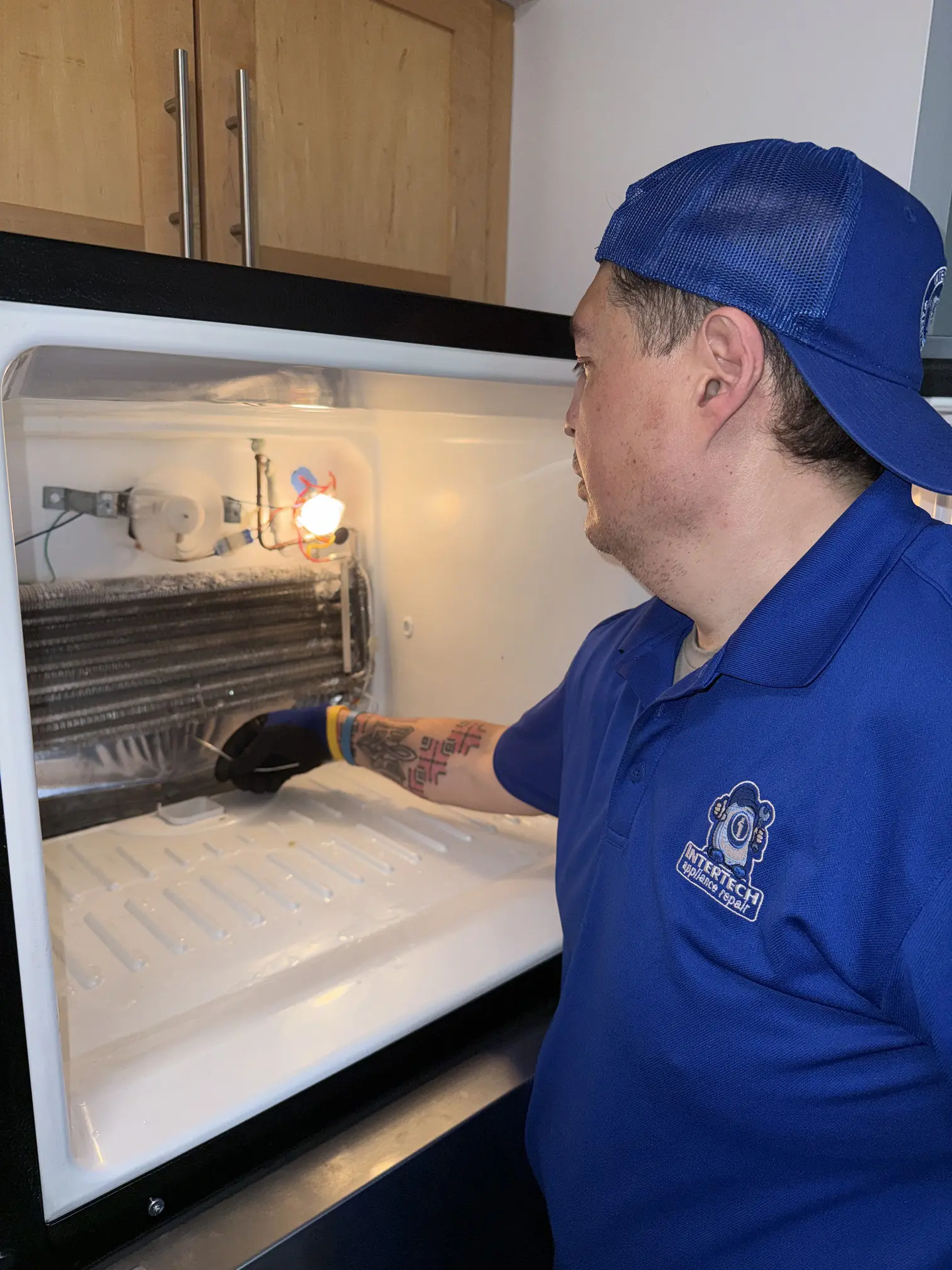
Professional Appliance Repair in Maryland, DC, and Virginia
Qualified appliance service involves more than replacing the first component associated with a visible symptom. A technician may need to test the electrical supply, thermostat, sensors, fans, defrost system, compressor starting components, controls, and refrigeration performance.
Homeowners searching for dependable appliance repair services in Maryland can contact InterTech Appliance Repair for professional diagnostics and repair. Proper testing helps identify the actual cause of the malfunction and reduces the risk of replacing unnecessary parts.
Freezer Repair Service Areas
InterTech Appliance Repair provides appliance service throughout multiple communities in Maryland, Washington, DC, and Northern Virginia.
Maryland service locations include Bethesda, Rockville, Potomac, Silver Spring, Clarksville, Fulton, Ellicott City, Columbia, Gaithersburg, Germantown, North Bethesda, Kensington, Chevy Chase, and Derwood.
Service is also available in Washington, DC, and in Virginia communities such as Arlington, Alexandria, McLean, Tysons, Falls Church, and Reston. Homeowners in other nearby areas can contact the company to confirm current service availability.
How Can You Help Prevent Freezer Problems?
Regular care cannot prevent every component failure, but it may improve cooling performance and reduce unnecessary strain on the appliance.
- Keep the freezer door fully closed;
- Clean the door gasket and check it for damage;
- Do not block internal air vents with food packages;
- Avoid overfilling the freezer;
- Keep adequate space around the appliance for ventilation;
- Clean accessible condenser coils when recommended by the manufacturer;
- Check the temperature periodically;
- Investigate unusual noises or recurring frost early;
- Arrange service if food begins thawing unexpectedly.
Schedule Professional Freezer Repair Services
A freezer that is not maintaining the proper temperature can put stored food at risk and increase household energy costs. Problems such as recurring frost, continuous operation, unusual noises, water leaks, and rising internal temperatures should be addressed before they cause additional appliance damage.
For professional Freezer Repair Services, contact InterTech Appliance Repair. Professional diagnostics can determine the source of the malfunction and help restore reliable freezer operation whenever repair is a safe and cost-effective solution.